

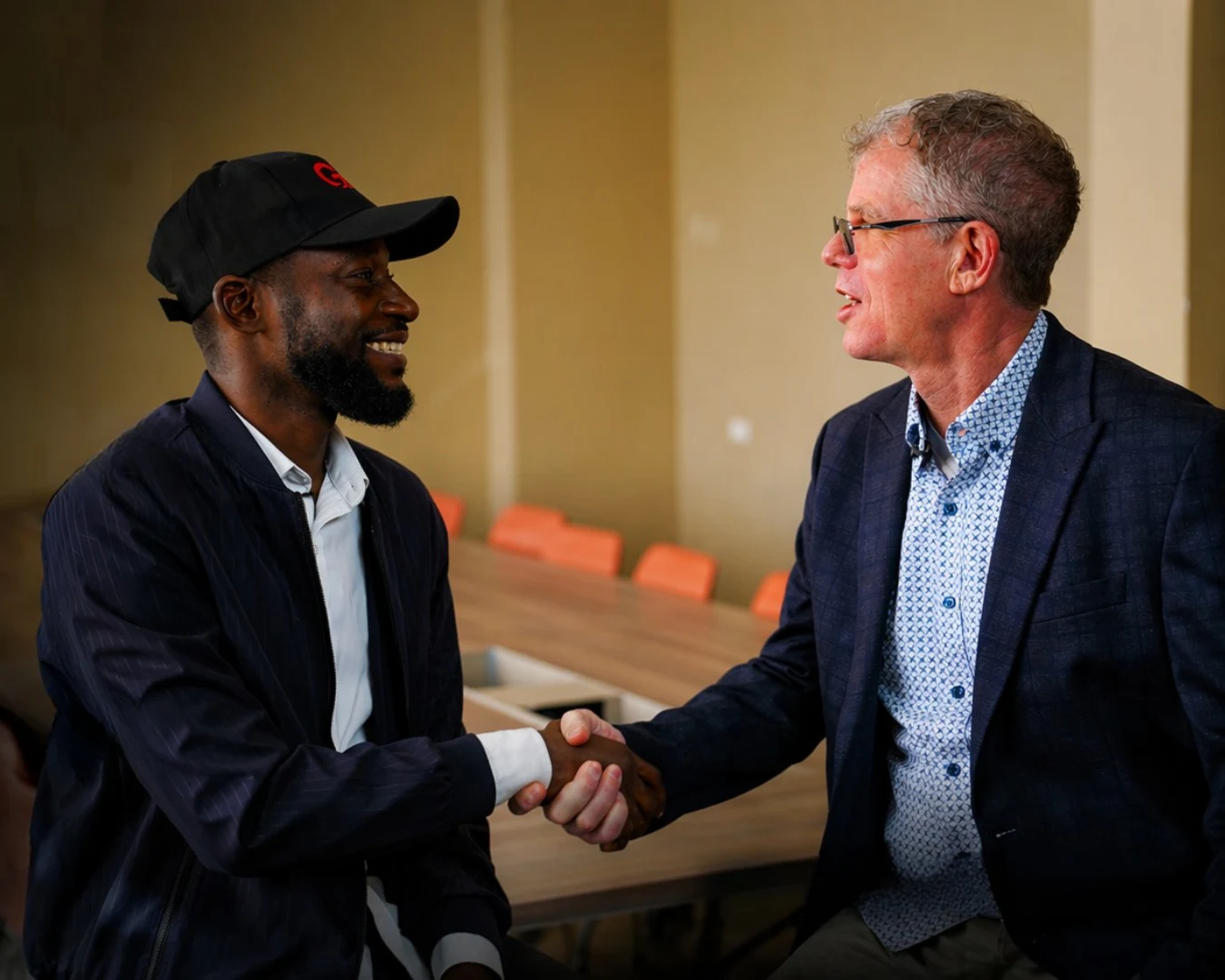
Interviewer (Chad Sutton, GO Movement):
Hi, my name is Chad Sutton with GO Movement. I’m here with Denilson from Angola. Denilson has been with GO Movement for 11 years, and he’s going to share what he has seen from the beginning until now. Denilson, tell us a little about how things were when you were getting started, how things developed, and where things are today.
Denilson (National Coordinator Angola):
Thank you for the opportunity to share about what God is doing in my country and about our experience with GO Movement. I would definitely say that GO Movement has changed my life, my ministry, and my nation.
Back in 2014, one of the Angolan leaders saw GO Movement on Facebook and decided to follow the vision. At that time, I was already doing conferences in Angola, bringing missionaries together from all over the country. That leader attended one of my conferences and noticed the way people came together. He thought, “This man must be leading GO Movement, not me.” So he approached me and presented the vision of GO Movement.
I immediately said, “Yes, this is what I like. Evangelism. Let’s go.” I joined the vision, and since 2015, I took over the leadership of GO Movement in Angola and began casting the vision to churches and people across the country.
It was not easy in the beginning. People were suspicious. They would ask, “What is this? Are you trying to take people from our church to your church or ministry?” We kept explaining, “No, we just want to go out together for one day, all at the same time, to share the gospel. Then you go back to your own churches and continue discipleship in your own way.”
Now, after 11 years, we have a very strong movement. We have all 18 regions involved, with coordinators in each province—actually two people in each province. We have a large volunteer team, around 52 people working for GO Movement in Angola. Just last year, we had 980 churches working together and 148,000 evangelists participating on GO Day. Today, evangelism is becoming a culture in my nation. Everyday believers are going out and sharing the gospel.
Interviewer:
And you help lead those teams out—you and your people in Angola?
Denilson:
Yes, absolutely. GO Movement helped us present to churches that evangelism is not just a program—it’s a lifestyle, and it’s doable. Churches wanted to evangelize, but they didn’t know how to start, how to interact with people, or what practical steps to take.
The three-step evangelism tool that GO Movement gave us was very helpful. We have been training the nation for 11 years using that same tool.
Interviewer:
When you first started with GO, what were some of the initial challenges?
Denilson:
In Angola, people were not very open to evangelistic projects. Churches preferred to pay for gospel concerts and other events. Mass evangelism and outreach events were new to them. If you asked people to support travel, pastors’ lunches, or mobilization efforts, they often would not give, because it seemed strange to them. They would think, “Why are you pushing churches to go preach and share?”
That was one of the biggest challenges.
For nine years, I didn’t know anyone personally from the GO office. I was just working because I loved the vision. Even before I met GO Movement, I was already doing evangelism and traveling across my country with whatever small support I could get from friends and from some small businesses I had.
We had a very old car. Sometimes we would leave on a trip knowing we were going, but not knowing if we would come back. That’s a funny story now, but it was very real. Sometimes we had to stop in the bushes and wait for some “spiritual mechanic” to appear and fix the car. And still, we kept going.
Many times, miracles happened on the road. People would call and say, “Hey, we heard you are in that village. Send your bank details—we want to send fuel.” Others would say, “We heard what you’re doing—send your bank details.” And by faith and miracle, we would travel through nine provinces, eleven provinces.
That was the beginning.
After four or five years, some people and churches began to believe in what was happening because we were being effective. One of the things we did was help churches directly. I run a missionary school that I started 13 years ago, and with my students, I would tell pastors, “If your church doesn’t have the people or ability to go evangelize, I will come with my students. We will preach the gospel in your neighborhood, and then on Sunday, we will all attend your church service with the people we reached. Then you take over from there.”
Pastors began to say, “These guys are preaching for us. They are not asking for money.” That is how they began to trust the movement, and that is how our partnerships grew.
After six or seven years, we started holding pastors’ lunches. We knew they might not come for evangelism, but we wanted them to know something important was happening. We would say, “Just send your people, your evangelists. We will train them. We will equip them.” And their trust began to grow rapidly.
One day, Werner visited us, and I took him to a church that had only 73 to 80 people meeting in a house when we first introduced GO Movement there. After two years of GO Movement and a lifestyle of evangelism, that church had grown to around 500 people. Brandon even went there to preach. Praise God. That is how we grew.
Interviewer:
So you’re saying that when you step out in faith—despite cars breaking down, lack of fuel, lack of resources, lack of funds—God shows up. He’s not just partnering with you in the mission; He is the mission. And everyday believers can go out and share their faith, right?
Denilson:
Yes, they can. And we help enable them to be bold and to step out and do it. GO Movement is a movement to bring people to Christ, and then the local churches benefit by discipling those people in Christ.
Interviewer:
Exactly. So how many people have you seen in Angola come to know the Lord Jesus Christ over these 11 years?
Denilson:
In 11 years, I would say it is a huge number. Probably around 2,000,000 people have heard the gospel, and maybe around 1,000,000 decisions have been made for Christ.
Just last year alone, from GO Day in all 18 regions, with 148,000 evangelists from 980 churches and many different church backgrounds, we preached the gospel to 800,000 people and saw more than 500,000 decisions for Christ. Those are the numbers from just last year.
Interviewer:
Wow. Denilson, that’s amazing. It sounds like a festival.
Denilson:
Yes—and after 11 years, people are used to it now. They know that when May is coming, social media starts shaking. We go on TV, on radio, and people call me “Mr. Mission” in Angola.
Most people think I don’t know how to preach any other topic. They think I only know how to preach evangelism because from January to December, that is what we are doing—on Facebook, on social media, and everywhere we go.
One of the greatest revelations God ever gave me comes from the book of Job. The Bible says that Job’s ten children were gathered together when a wind came, struck the house, and they all died that day. The Lord put something in my heart: if someone could have run faster than the wind, they would have arrived first, warned them, and they would have been saved.
Today there are many winds. Drugs are a wind. Alcohol is a wind. Sometimes those winds reach people’s lives before the gospel does. Sometimes the church and believers arrive too late—like the police in a movie, arriving after everything is already broken.
So we have to reach people before disaster reaches them. We have to arrive in their lives before destruction does. That is what it means to run faster than the wind.
That is the vision that moves me. That is what drives me when I cast the vision of GO Movement. I tell people, “We need to run faster than the wind. Let’s do it.”
And here we are.
After COVID, in 2021, we had no money, no funding, and no connections. I was praying for God to provide support and partnerships. It is especially hard in Angola because although there is money, there is not much culture of funding ministry projects.
Then God put this in my heart: sell your car.
I felt the Lord say, “You can be the answer to the prayer you are praying.”
I said, “Really? Okay. I will be the answer to my own prayer.” So I sold my car and used all the money to divide my team and send them across the whole country to mobilize for GO Day in 2021. We had a wonderful GO Movement campaign that May. I do not regret it. I am happy.
Interviewer:
That’s incredible. Is there anything else you’d like to share with someone who may be wondering whether they should get involved with GO Movement—maybe leading a team, maybe stepping out, but they have doubts and wonder, “How could I do something like this?”
Denilson:
Yes. I would say this: the world is lost, and we carry the greatest message ever.
As Oswald Smith used to say, if you are born again but feel no passion to share the gospel, then maybe you are not truly born again.
The only hope for the world is that those who have more will share with those who have nothing. Think about it—how long have you been going to church? Five years? Ten years? You have heard the gospel hundreds or thousands of times. Meanwhile, there are people who have not heard it even once.
So never miss the opportunity to affect someone’s life positively. Through the gospel, you can change someone’s destiny forever.
That is why you must be involved with GO Movement.
We are waiting for you.
Interviewer:
Amen.